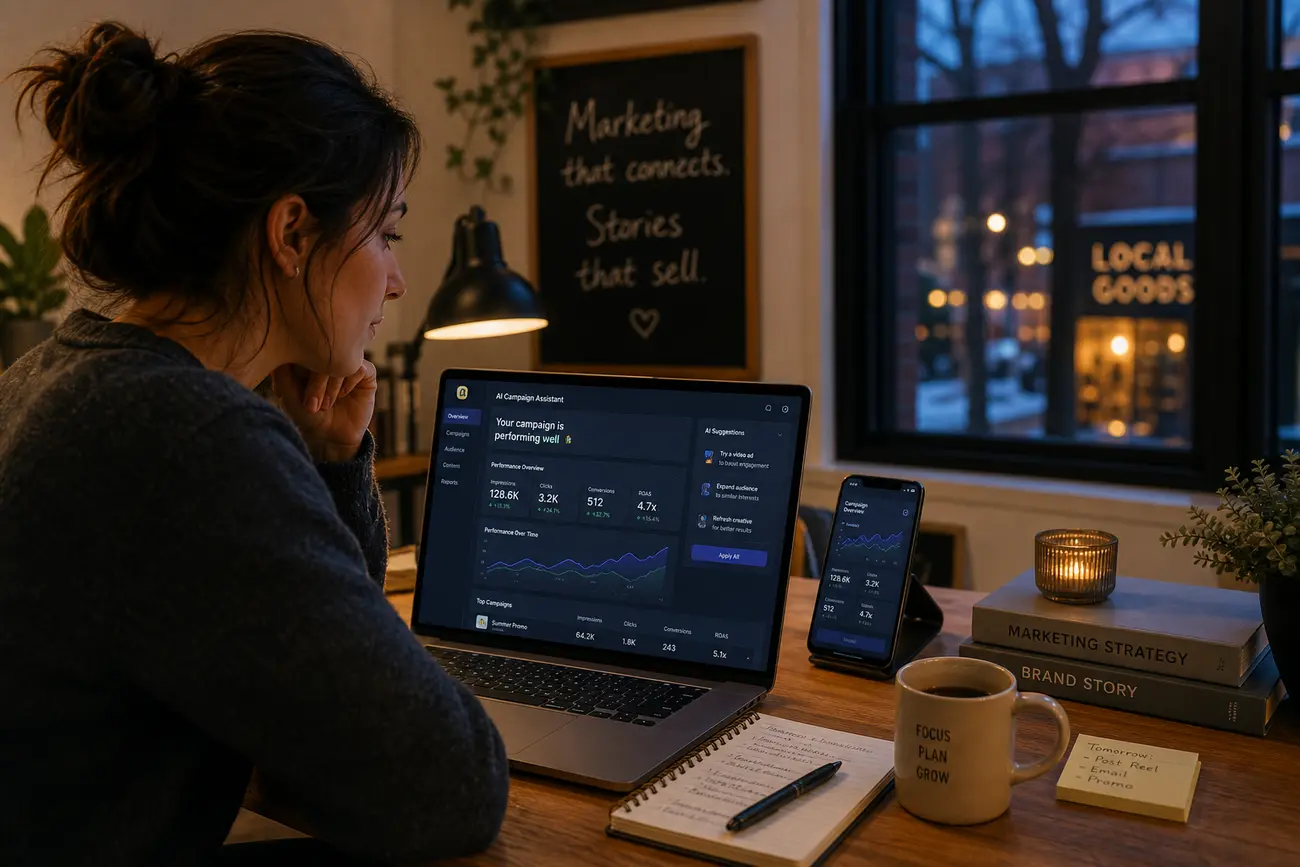
The real choice in facebook ads vs google ads is not which platform is universally better; it is whether your business needs to capture existing demand, create new demand, or do both. This guide gives you a practical way to decide where to spend first, how each platform works, and how to measure performance before scaling.
Facebook Ads vs Google Ads: The Core Difference Small Businesses Need to Know
The simplest difference between google ads and meta ads is intent. Google Ads captures people who are actively searching for a product, service, quote, location, or answer. Meta Ads, which includes Facebook and Instagram, creates demand by putting strong creative in front of people based on interests, behaviors, demographics, and engagement.
Google Ads includes Search, Display, YouTube, Shopping, Performance Max, and Maps placements. Meta Ads includes Facebook, Instagram, Messenger, Reels, Stories, and Audience Network. In practical terms, an emergency plumber should usually prioritize Google Search because the customer already needs help. A local fitness studio, boutique, restaurant, coach, or beauty brand may get better early results from Meta because visual proof, offers, and storytelling influence demand.
When Google Ads Is the Better Choice
Google Ads is usually the stronger choice when people already search for what you sell. This is common for local services, ecommerce products, B2B software, medical appointments, emergency services, legal help, repairs, and appointment-based businesses. Searches containing “near me,” “pricing,” “best,” “quote,” “book,” or “available today” reveal buying intent that Meta often cannot match.
For small businesses, Search campaigns are best for high-intent leads, Shopping campaigns work for ecommerce, Performance Max can extend reach across Google inventory, and YouTube helps with awareness and remarketing. Before launching, understand your Google Ads login, Google Ads manager, Google Ads settings, Google Ads app, and Google Ads campaign setup. If you want help handling campaigns without a full-time specialist, this guide on how to manage Google Ads with AI is a useful next step.
Google can also get expensive quickly. Use negative keywords, conversion tracking, tight location targeting, relevant landing pages, and clear bidding goals before increasing spend.
When Meta Ads Is the Better Choice
Meta Ads is often better when customers need to discover, understand, or trust your offer before they search. It is strong for restaurants, beauty, ecommerce, events, real estate, personal brands, courses, fitness, local retail, and lifestyle services.
Meta’s advantages include interest targeting, lookalike audiences, video creative, social proof, retargeting, and low-friction lead forms. It can be cheaper for reach and traffic than Google, but cheap clicks do not automatically mean profitable leads. The winning variable is usually creative: hooks, images, short videos, testimonials, before-and-after examples, offer framing, and a clear call to action.
Google Ads and Facebook Ads Together: The Highest-Impact Strategy
Many businesses should not treat google ads facebook ads as an either-or decision. Meta can introduce your brand, educate prospects, and build retargeting audiences. Google can then capture people when they search later with higher intent.
A simple full-funnel setup is: Meta video or lead magnet ads for awareness, Google Search campaigns for bottom-of-funnel queries, and Meta retargeting ads for visitors who did not convert. This combination improves results because Google captures intent while Meta builds trust.
Use shared tracking foundations before scaling: Google Tag, Meta Pixel, Conversion API, UTMs, CRM tracking, call tracking, and offline conversion imports. As a starting budget split, put 60–70% toward the platform closest to purchase intent and 30–40% toward retargeting or demand generation, then adjust based on cost per qualified lead.
Cost Comparison: Google Ads Cost vs Meta Ads Cost
Google Ads cost is driven by keyword competition, location, industry, Quality Score, and bidding strategy. Meta Ads cost is driven by audience, creative quality, placement, competition, and campaign objective. In facebook ads vs google ads, Google Search often costs more per click but brings stronger intent; Meta often has lower CPMs but may require more nurturing.
Is $20 a day good for Google Ads? It can work for narrow local campaigns, testing, or low-competition niches, but it may be too low for competitive legal, finance, medical, or national campaigns. How much does it cost to do a Google ad? There is no fixed price: advertisers set a daily budget and usually pay per click, impression, conversion, or video view depending on the campaign type.
How much do Google Ads pay per 1,000 views? For advertisers, Google usually charges for impressions or views. Payments per 1,000 views apply to eligible publishers or creators monetizing ad inventory, not to typical advertisers buying traffic.
Which Paid Advertising Platform Is Best for Your Business?
The best platform for paid ads depends on customer intent. Choose Google when demand already exists. Choose Meta when you need demand generation, education, visual proof, or retargeting. Choose both when the customer journey includes research, comparison, and follow-up.
Google Ads is often the best PPC platform for search intent and is the platform most commonly associated with PPC. Meta is one of the strongest social paid media platforms. Other top online advertising platforms include LinkedIn Ads for B2B, TikTok Ads for short-form discovery, Microsoft Ads for cheaper search traffic, Amazon Ads for marketplace sellers, and YouTube Ads for video reach.
Companies that use pay-per-click advertising include local service businesses, ecommerce stores, SaaS companies, healthcare providers, education firms, franchises, and national brands. The right choice should be based on unit economics: average order value, lead value, close rate, sales cycle, margin, and target cost per acquisition.
How to Track Conversions and Lead Quality Before Scaling
Clicks and impressions are not the goal. Judge facebook ads vs google ads by qualified leads, booked calls, purchases, revenue, and customer acquisition cost. The minimum tracking setup should include Google Ads conversion actions, GA4, Meta Pixel, Conversion API, UTMs, thank-you pages, form tracking, call tracking, and CRM status updates.
To compare platforms fairly, use similar attribution windows where possible, review assisted conversions, track lead source, and measure sales-qualified leads instead of raw form fills. Also run campaigns long enough to collect useful data, test one major variable at a time, and avoid shutting campaigns off before learning signals stabilize.
Poor landing pages, slow response times, weak offers, and missing follow-up can make either platform look worse than it really is. If lead quality is a problem, improve the page and offer before blaming the channel. For practical help, see this guide on building a high-converting landing page for leads.
Final Recommendation: Start Where Intent Is Strongest, Then Build the Funnel
The practical answer to facebook ads vs google ads is simple: use Google Ads when people are already searching, use Meta Ads when you need to create demand or retarget, and use both when you want a complete customer journey.
Start with one clear offer, one primary conversion goal, and the platform that best matches the buyer’s current intent. Add the second platform only after tracking, landing pages, and follow-up systems are working.
- Who is the target customer?
- Are they actively searching or still need education?
- Is the offer strong enough to convert cold traffic?
- What is the budget and expected lead value?
- Is conversion tracking ready?
- Can your team follow up quickly?
FAQ
Is $20 a day good for Google Ads?
Yes, $20 a day can work for narrow local campaigns, early testing, or low-competition niches. It is often too low for competitive legal, finance, healthcare, home services, or national campaigns.
How much does it cost to do a Google ad?
There is no fixed Google Ads cost. You choose a daily budget and pay based on the campaign type, such as clicks, impressions, views, or conversions.
How much do Google Ads pay per 1,000 views?
Google Ads usually charges advertisers for views or impressions. Google may pay eligible publishers, websites, or YouTube creators through monetization programs, but that is different from running ads.
What is the best platform for paid ads?
The best platform depends on intent. Google is best when buyers are searching now, Meta is best for discovery and retargeting, and both work well for a full-funnel strategy.
What is the cheapest paid advertising platform?
Meta often has cheaper reach and lower CPMs, but the cheapest traffic is not always the most profitable. Profit depends on lead quality, conversion rate, sales value, and follow-up.
What is the best PPC platform?
Google Ads is often the best PPC platform for high-intent search traffic. Meta is usually better for social discovery, visual offers, and audience-based demand generation.
Which platform is most commonly used for PPC?
Google Ads is the most widely recognized PPC platform, especially for search advertising. Microsoft Ads is also PPC, but Google has broader search demand.
What companies use pay-per-click advertising?
Local services, ecommerce brands, SaaS companies, healthcare providers, education companies, franchises, marketplaces, and enterprise brands all use PPC to generate leads or sales.
What companies will pay you to advertise?
Brands may pay affiliates, influencers, publishers, newsletter owners, and creators to promote products. Platforms such as Google can also pay eligible publishers or YouTube creators who monetize ad inventory.
How do I stop Google Ads on my phone?
If you are an advertiser, open the Google Ads app, select the campaign, and pause it. If you mean ads shown to you personally, adjust ad personalization and notification settings in your Google account or phone settings.
Share Article
Your Digital Edge, Fully Automated
Spin up a cutting-edge website in minutes and preview it free - no signup, no credit card. Then keep growing it with MR.ROBOT's AI pipeline that writes, optimizes, and publishes SEO articles straight from your phone.
No signup. No credit card. You only pay when you love the result.