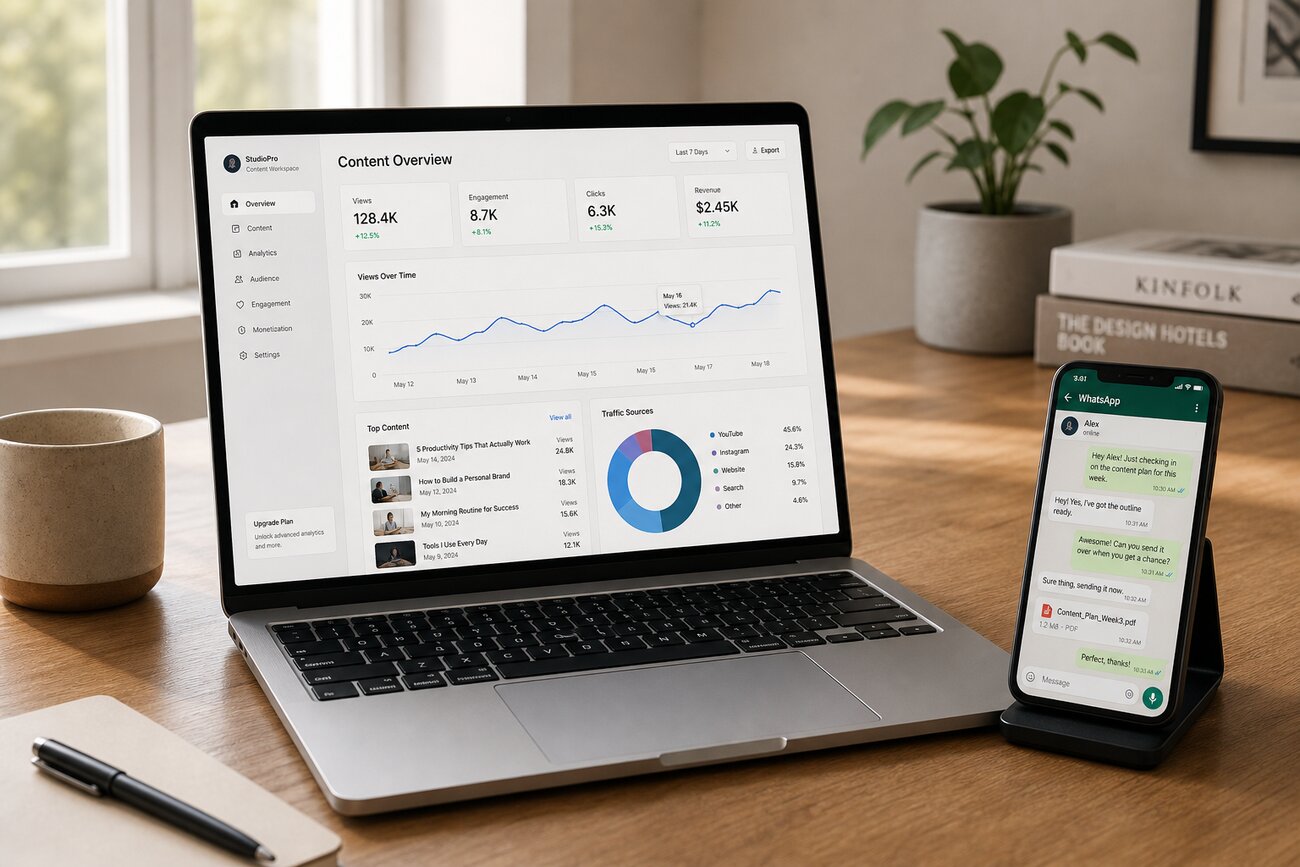
Your Google Ads campaign is spending money every day, but you are not sure whether the problem is keywords, ads, budget, Quality Score, or the landing page. A google ads optimization tool powered by an AI agent can help you turn that uncertainty into a clear action list: what to pause, what to test, where to shift budget, and what needs human review before changes go live.
What an AI Agent Can Actually Improve in a Google Ads Campaign
An AI agent is not just a chatbot giving generic advice. In a practical advertising workflow, it reviews campaign data, detects patterns, finds likely issues, recommends fixes, and prepares changes for a marketer to approve. Used correctly, a google ads optimization tool acts like a campaign analyst that works faster through the repetitive parts of optimization.
It can support keyword pruning, bid and budget checks, ad copy testing, search term analysis, landing-page diagnosis, and google ads quality score optimization. For example, it can flag a keyword spending heavily with no conversions, identify search terms that should become negative keywords, or show that an ad group has weak message match between the keyword, ad, and landing page.
The best setup does not blindly automate everything. High-impact changes such as pausing a major campaign, increasing budgets, changing bidding strategy, or rewriting offers should still require human approval. AI is strongest when it improves your speed and clarity, while your business strategy, positioning, and risk decisions stay in human hands.
Step 1: Connect the Right Google Ads Data Before Optimizing
Before using any google ads optimization tool, define what success means. A campaign built for leads should not be judged the same way as one built for purchases, calls, bookings, app installs, or traffic. The AI agent needs to know the business goal, the primary conversion action, and what a valuable conversion is worth.
Next, verify tracking before trusting performance recommendations. Check Google Ads conversion tracking, Google Tag Manager, GA4 events, call tracking, ecommerce revenue, and imported offline conversions if your sales happen after the form fill. If tracking is wrong, even the best google ads ai tools will optimize toward bad signals.
The agent should be able to review campaign type, impressions, clicks, CTR, CPC, conversions, cost per conversion, conversion value, Quality Score for search keywords, search terms, and device, location, audience, and time-of-day performance. Also confirm access and settings through your Google Ads login, Google Ads Manager account, campaign settings, and the Google Ads app if you monitor changes on mobile.
Step 2: Use the AI Agent to Find Weak Keywords and Search Terms
One of the fastest wins is finding where spend is leaking. Ask the AI agent to identify high-spend, low-conversion keywords that should be paused, reduced, restructured, or moved into a separate test campaign. A good google ads optimization tool should not only say “pause this keyword”; it should explain whether the issue is low intent, high CPC, weak conversion rate, or insufficient data.
Search term reports are equally important. The agent can scan the exact queries that triggered your ads, group irrelevant patterns, and suggest negative keywords. This is especially useful when broad match keywords attract traffic that sounds related but does not match buying intent.
- Research intent: searches looking for definitions, ideas, or general education.
- Comparison intent: searches comparing providers, prices, features, or alternatives.
- Commercial intent: searches showing interest in a product, service, quote, demo, or consultation.
- Ready-to-buy intent: searches with urgent, local, branded, or purchase-focused language.
The same analysis can uncover new opportunities. If a search term converts repeatedly and is not already a keyword, add it to a tightly themed ad group with more specific ad copy and a better-matched landing page.
Step 3: Improve Ads with AI-Generated Testing Ideas
Use google ads ai tools to compare responsive search ads by CTR, conversion rate, cost per conversion, ad strength, and message relevance. The agent can identify repeated weak assets, vague benefits, unclear calls to action, and offers that do not match the searcher’s intent.
Then use the AI agent to generate controlled testing ideas. Strong ad angles often come from speed, price, trust, local availability, guarantees, convenience, proof, or a specific outcome. For example, instead of testing five random headlines at once, test one clear variable: “same-day service” versus “free estimate” versus “licensed local team.”
A common question is, “What is the most successful commercial of all time?” There is no single universal answer because success depends on whether you measure fame, revenue, cultural impact, or efficiency; Apple’s “1984,” Nike’s “Just Do It,” and major Coca-Cola campaigns are often cited. In Google Ads, however, the most successful ad is the one that profitably converts your audience. Keep human review in the loop so AI-generated copy avoids exaggerated claims, policy issues, and generic language.
Step 4: Diagnose Budget, Bids, and Google Ads Cost Problems
Budget optimization starts by finding wasted spend, not by automatically raising the daily budget. A google ads optimization tool should compare cost per conversion by campaign, keyword, device, location, audience, and time of day. If mobile traffic spends heavily but converts poorly, or one city has double the CPA of another, the agent should bring that to the surface.
Is $20 a day good for Google Ads? It can be enough for a small local test, a narrow service area, or a low-CPC niche. But in competitive industries, $20 may produce too few clicks and conversions to learn quickly. The right budget depends on CPC, competition, conversion rate, targeting, and how much data you need before making decisions.
How much does Google Ads cost? Google Ads is auction-based, so CPC varies by keyword, industry, geography, intent, Quality Score, and bidding strategy. A practical AI workflow shifts budget away from low-intent or expensive segments and toward campaigns with stronger conversion signals. If you want a broader self-managed approach, see how to manage paid campaigns yourself with AI ads.
Step 5: Use AI for Google Ads Quality Score Optimization
Google ads quality score optimization improves the relationship between keyword intent, ad relevance, expected CTR, and landing-page experience. A low Quality Score does not always mean the same problem, so the AI agent should group keywords by likely cause: poor ad relevance, weak CTR, or landing-page mismatch.
A practical google ads optimization tool can recommend tighter ad groups around specific products, services, locations, or buyer intents. Instead of one broad ad group covering many variations, create focused groups where the keyword, headline, offer, and landing page all tell the same story.
Landing pages matter. Align the page headline, proof, copy, form, and call to action with the ad promise. If your ad says “emergency plumber in Austin,” the page should not open with a generic national plumbing message. For deeper landing-page work, read how to build a high-converting landing page for leads.
Step 6: Build a Repeatable AI Agent Optimization Workflow
The most reliable results come from a weekly workflow: pull performance data, detect anomalies, identify wasted spend, recommend fixes, approve changes, and document results. Useful prompts include: “Find the top 10 keywords wasting spend,” “Suggest negative keywords from this search term report,” and “Explain why this campaign’s CPA increased.”
Set guardrails before allowing automation. Limit maximum bid changes, require approval for budget increases, prevent the agent from pausing high-value campaigns without review, and document every major change. Track before-and-after metrics such as CTR, CPC, conversion rate, cost per conversion, impression share, and conversion value.
AI works best when it supports a clear marketing strategy. The 4 marketing strategies are often summarized as the 4 Ps: product, price, place, and promotion. The 5 Cs are company, customers, competitors, collaborators, and context. A practical five-part strategy is audience, offer, message, channel, and measurement. The seven steps of marketing strategy are typically research, segmentation, targeting, positioning, offer design, channel planning, and performance measurement. Your AI agent can improve execution, but it should not replace these strategic decisions.
FAQ
Is $20 a day good for Google Ads?
Yes, $20 a day can be good for a small local campaign, a narrow keyword set, or an early test. It may not be enough in competitive markets where clicks are expensive or conversions require more volume. Judge the budget by CPC, conversion rate, and how quickly you can collect useful data.
How much does Google Ads cost?
Google Ads costs vary because the platform uses an auction. Your CPC depends on keyword competition, industry, location, intent, Quality Score, and bidding strategy. A google ads optimization tool helps reduce waste by showing which clicks are most likely to become valuable conversions.
Can I run Google Ads for free?
You cannot run normal Google Ads clicks for free. Creating an account and accessing the platform may be free, and some accounts may receive promotional credits, but traffic from ads is paid. You still need a budget once those credits are used.
What should a Google Ads optimization tool analyze first?
It should analyze conversion tracking first, then wasted spend, search terms, weak keywords, ad relevance, budget allocation, device and location performance, and landing-page signals. Optimizing before tracking is verified can lead to the wrong conclusions.
How can AI improve Google Ads Quality Score?
AI can improve google ads quality score optimization by identifying mismatches between keywords, ad copy, expected CTR, and landing-page content. It can then rank fixes by impact, such as rewriting ads, restructuring ad groups, or improving landing-page relevance.
Do I still need a campaign manager if I use Google Ads AI tools?
Usually, yes. Google ads ai tools can reduce manual analysis and speed up reporting, but human judgment is still important for strategy, offers, compliance, customer insight, and budget decisions. The best model is AI-assisted optimization with expert approval.
How do I make $100 a day on AdSense?
AdSense is different from Google Ads: it pays publishers for showing ads on their sites. Making $100 a day requires enough qualified traffic, strong content, compliant ad placements, and RPM high enough to support that goal. It is not a direct method for optimizing paid Google Ads campaigns.
How much does AdSense pay per 1,000 views?
AdSense pay per 1,000 views varies widely by niche, country, device, season, advertiser demand, and page layout. Some sites earn very little per 1,000 views, while high-value niches can earn more. For advertisers, the more relevant question is whether Google Ads clicks produce profitable conversions.
Share Article
Your Digital Edge, Fully Automated
Spin up a cutting-edge website in minutes and preview it free - no signup, no credit card. Then keep growing it with MR.ROBOT's AI pipeline that writes, optimizes, and publishes SEO articles straight from your phone.
No signup. No credit card. You only pay when you love the result.