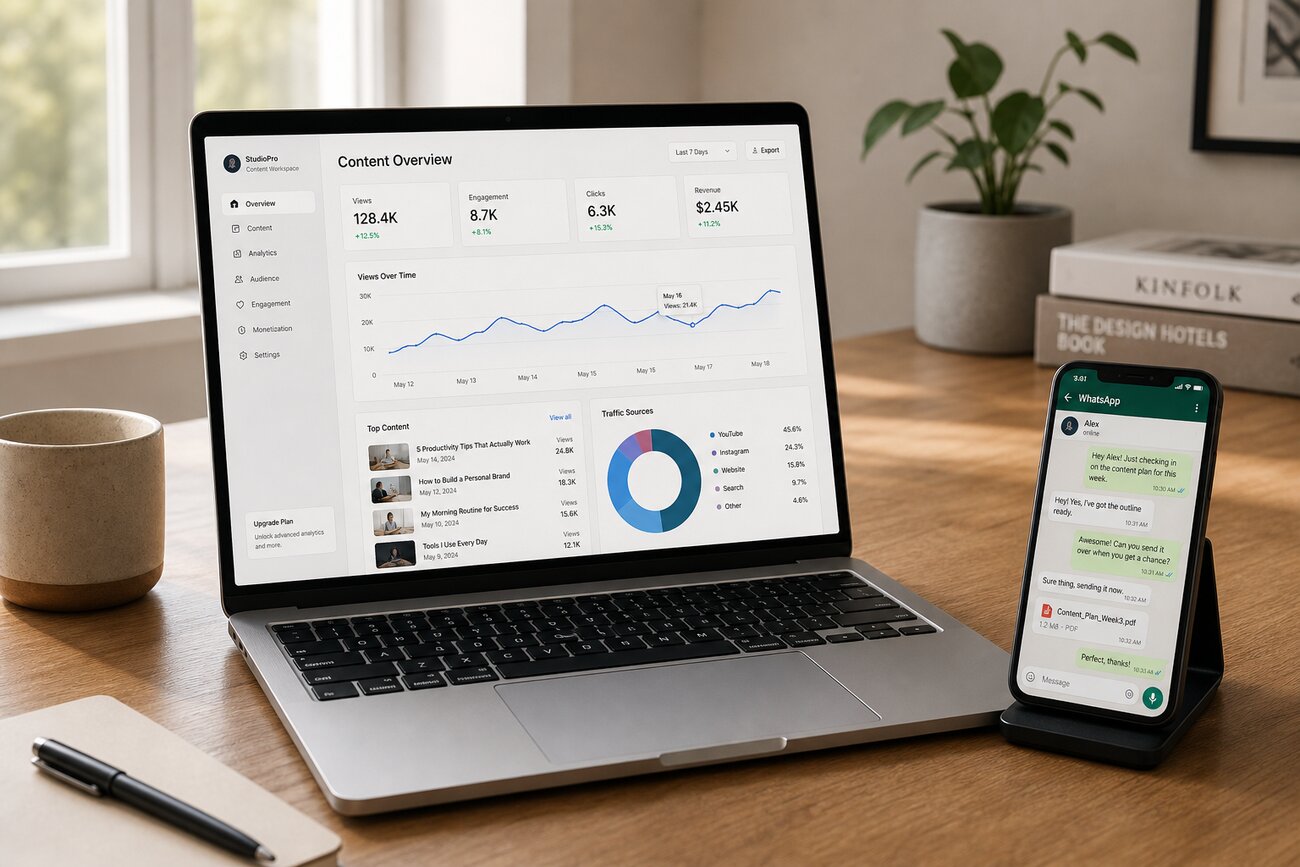
ai ads can act like a practical campaign co-pilot for business owners who want to manage paid campaigns themselves. They can help you plan, write, test, and analyze faster, but profitable advertising still depends on clear goals, accurate tracking, good offers, and human judgment.
Start With the Business Goal Before You Let AI Build the Ads
Before opening Google Ads, Meta Ads Manager, or any AI tool, choose one primary objective: leads, sales, bookings, app installs, store visits, or calls. AI works best when it is given a specific commercial target, not a vague request like “make me more customers.”
Set a realistic monthly budget and decide what you can afford to pay for one lead or customer. Then define the conversion action: purchase, form submission, phone call, WhatsApp message, booked consultation, or another measurable event. Without this, ai ads may optimize for cheap clicks instead of real business value.
A useful campaign brief should include audience, offer, location, budget, landing page, conversion goal, and success metric. The more constraints you provide, the better AI can suggest relevant copy, targeting, keywords, and testing ideas.
How to Plan AI Ads Without Hiring a Full-Time Campaign Manager
You can use AI to research customer pain points, competitor angles, buying objections, and common questions before writing ads. Ask it to segment your audience by intent, awareness level, geography, urgency, and buying stage.
- Prompt for ad angles: “Create 10 paid ad angles for a local accounting firm targeting small business owners who need tax help before filing deadlines.”
- Prompt for keyword themes: “Group search intent keywords for emergency plumbing services into campaigns by problem, urgency, and location.”
- Prompt for testing ideas: “Suggest five A/B tests for headlines, offers, landing page sections, and creative hooks.”
The owner should still approve the strategy, pricing, claims, offer, and brand tone before anything goes live. AI can generate options, but it cannot know your margins, sales capacity, or legal limits unless you tell it.
Using Google AI Ads for Search, Performance Max, and Local Demand
google ai ads are especially useful when people are already searching for what you sell. They work well for high-intent services, ecommerce products, local demand, remarketing, and campaigns where keywords reveal urgency.
Google’s AI-assisted tools can help with keyword ideas, responsive search ads, asset generation, automated bidding, and Performance Max campaigns. Start with tightly themed campaigns and reliable conversion tracking before handing too much control to broad automation.
Review search terms, negative keywords, landing page relevance, budget pacing, and conversion quality every week. Google can optimize delivery, but it cannot know whether a lead became profitable unless your tracking, CRM, or offline conversion data is connected correctly.
Using Meta Ads AI for Facebook and Instagram Campaigns
meta ads ai is strongest for visual products, local promotions, lead generation, retargeting, audience discovery, and offers that need to create demand rather than capture existing search demand.
Inside Ads Manager, Meta Advantage+ tools can help with campaign budget optimization, automated placements, audience expansion, and ad variations. Feed the system better inputs: product benefits, testimonials, before-and-after concepts, short video scripts, objections, and proof points.
Do not judge Meta campaigns too early. The learning phase needs enough data and stable budgets. Also, Meta AI the chatbot is different from Meta’s advertising AI tools; the chatbot helps with brainstorming, while Ads Manager uses AI for delivery, creative testing, targeting signals, and optimization.
Launch Checklist: What to Verify Before Spending Money
Before launching ai ads, confirm your Google Tag, Meta Pixel, conversion pixel, CRM integration, or offline conversion tracking is working. Test the exact conversion path yourself, including forms, phone links, checkout, and booking tools.
Review ad copy for accuracy, compliance, claims, pricing, and brand tone. AI can accidentally exaggerate results, invent guarantees, or promote an outdated offer. Check geographic targeting, exclusions, start dates, daily budgets, payment settings, and account notifications.
Your landing page should load quickly, work on mobile, match the ad message, and make the next action obvious. If lead generation is your goal, this guide to building a high-converting landing page can help you improve the post-click experience.
Monitor Campaigns Like an Operator, Not a Guessing Machine
Track a small set of metrics: spend, impressions, clicks, CTR, CPC, conversion rate, CPA, ROAS, and lead quality. For service businesses, also review whether leads answer the phone, fit your ideal customer profile, and move into the sales pipeline.
Use AI to summarize weekly performance, but verify the numbers inside Google Ads, Meta Ads Manager, analytics, and your CRM. Common warning signs include high clicks with no conversions, low impressions, expensive leads, or many inquiries from people who cannot buy.
Prompt: “Analyze this exported campaign data. Identify the biggest changes in spend, CTR, CPC, conversion rate, CPA, and lead quality. Suggest the three highest-impact actions, but do not recommend increasing budget unless conversion quality supports it.”
Improve Results With AI Testing, Not Random Tweaks
The advantage of ai ads is not that they remove testing; it is that they make testing more structured. Use AI to propose A/B tests for headlines, hooks, offers, landing pages, creatives, audiences, and calls to action.
Prioritize tests by business impact. Do not change targeting, budget, creative, and landing page all at once, or you will not know what caused the result. Scale a campaign when it has stable conversion quality, acceptable CPA, and enough volume to justify more spend.
If a campaign underperforms after a fair test, pause it or rebuild the weakest part. AI can generate new creative briefs from winning ads, but your final decision should be based on profit, not just platform-reported engagement.
Risks, Limits, and When to Bring in an Expert
The main risks of self-managing ai ads are poor tracking, wasted budget, over-automation, weak creative, misleading claims, and misread data. AI tools cannot replace knowledge of your margins, compliance obligations, customer economics, or sales process.
Bring in an expert if you have a large budget, complex funnel, regulated industry, repeated tracking problems, or unclear attribution. A simple decision rule: if wasted spend is likely to exceed the cost of expert help, get support before scaling.
The best setup is not “AI instead of humans.” It is AI for planning, drafting, summarizing, and pattern-finding, with human oversight on strategy, offer, compliance, and spend.
FAQ
What are ai ads?
ai ads are paid campaigns that are planned, generated, optimized, or analyzed with AI tools. This can include Google’s automated bidding and asset tools, Meta’s Advantage+ features, AI-written ad copy, AI creative variations, and AI-assisted reporting.
How much does Meta AI cost?
Meta AI the chatbot is generally free to use in supported Meta apps. Running Facebook or Instagram ads is different: you pay based on your campaign budget, bidding model, audience, competition, and delivery.
Is Meta AI free?
Meta AI features may be free to access, but ad delivery is not free. If you launch campaigns through Meta Ads Manager, you will be charged according to your selected ad spend and campaign settings.
What is Meta AI?
Meta AI is Meta’s AI assistant for answering questions and generating ideas. It is not the same as meta ads ai inside Ads Manager, which helps with targeting, placements, creative variations, budget optimization, and campaign delivery.
Is Meta AI safe to use for ad planning?
It can be useful for brainstorming, but do not share sensitive customer data, private financials, or confidential strategy. Always review claims, targeting, pricing, and compliance before using AI-generated ideas in live ads.
Are Google AI ads better than Meta ads AI?
Neither is universally better. google ai ads are usually stronger for active search intent, such as “emergency dentist near me.” Meta ads ai is often stronger for discovery, visual offers, local promotions, retargeting, and demand creation.
Do I need tools like Grubby AI to manage paid campaigns?
No. AI humanizer tools such as Grubby AI are not necessary for campaign management. Questions like “Does Turnitin detect Grubby AI?”, “How much does Grubby AI cost?”, “How to 100% humanize AI text?”, and “Is Grubby AI worth it?” relate more to AI-written text detection than paid ads. No tool can guarantee 100% undetectable or “humanized” text, pricing can change, and for advertising you are better served by accurate tracking, strong creative, clear offers, and platform tools from Google and Meta.
Share Article
Your Digital Edge, Fully Automated
Spin up a cutting-edge website in minutes and preview it free - no signup, no credit card. Then keep growing it with MR.ROBOT's AI pipeline that writes, optimizes, and publishes SEO articles straight from your phone.
No signup. No credit card. You only pay when you love the result.