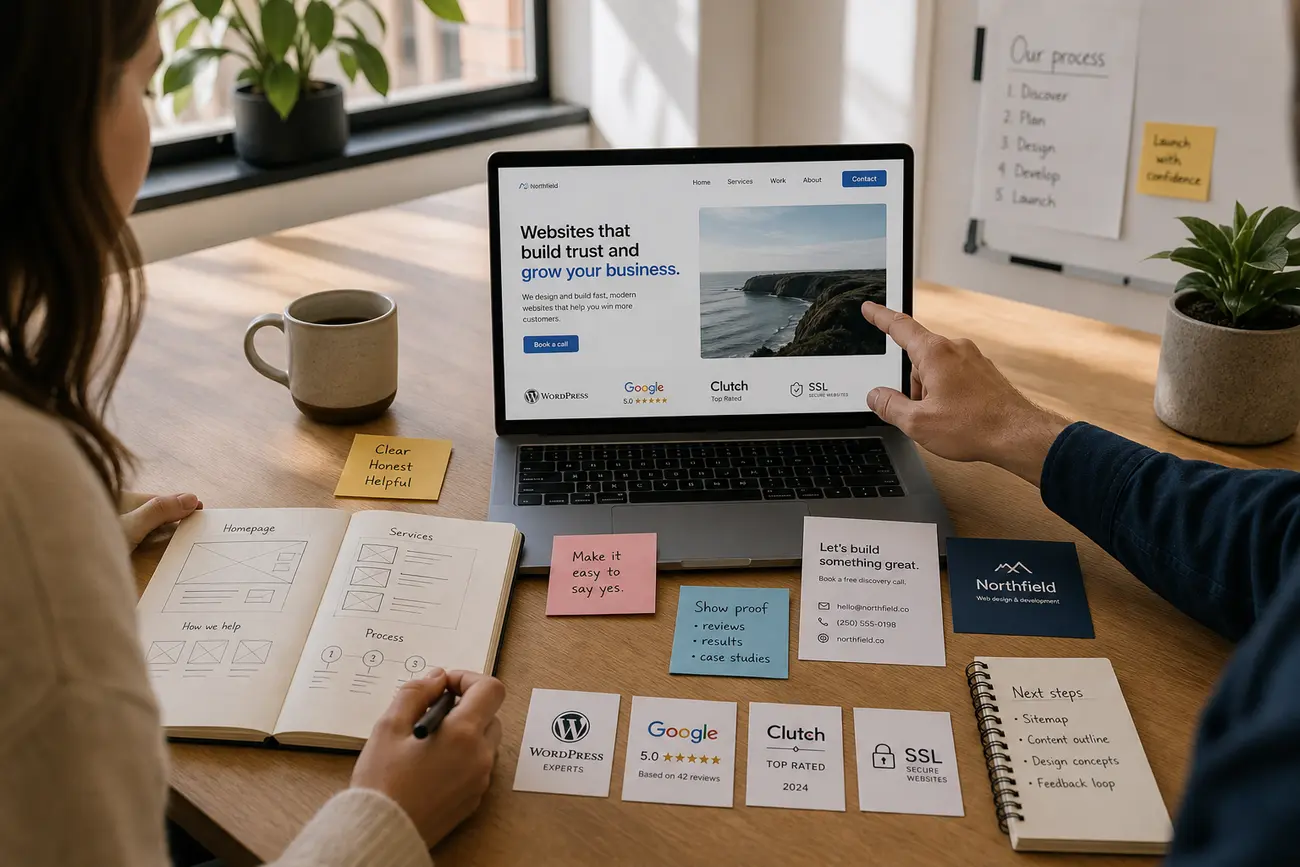
A lead generation landing page is not a brochure. It is the first test of whether a visitor becomes a sales opportunity or leaves forever. If the page earns attention, it supports customer acquisition. If it creates doubt, confusion, or delay, the visitor bounces and the pipeline loses a possible client.
Why Your Lead Generation Landing Page Is the Front Door to Customer Acquisition
Bounce rate is often treated like a dashboard number. That is too soft. A bounce is a person who arrived with some level of interest and left without taking the next step. In practical terms, high bounce means lost conversations, lost demo requests, and lost revenue chances.
When visitors leave fast, the page usually failed in one of two ways. It did not match what they expected from the ad, email, search result, or referral link. Or it matched the topic but did not guide them toward a clear action.
Lower bounce rate does not automatically mean more sales, but it creates the conditions for growth. More visitors stay long enough to understand the offer. More reach the form. More book demos. More qualified leads enter the pipeline.
What Is Conversion Optimization for Landing Pages?
Conversion optimization means improving a page so more visitors take the action you want. That action may be filling out a form, booking a call, downloading a guide, starting a free trial, or requesting pricing.
Good optimization is not about guessing which button color will win. It is about message clarity, page speed, relevance, trust, and focus. The visitor should understand the offer quickly, believe it is credible, and know exactly what to do next.
Bounce rate is an early warning signal in a conversion optimization strategy. If people leave before they scroll, click, or read, your page may have a positioning problem, a speed problem, or a mismatch between traffic source and page promise.
Diagnose Why Visitors Leave Before They Convert
Start with the obvious problems. Slow pages lose impatient visitors. Vague headlines force people to work too hard. Weak mobile layouts make forms painful. A page that does not match the ad copy creates instant distrust.
Do not analyze all traffic as one group. Search visitors may want a direct solution. Paid social visitors may need more context. Email visitors may already know your brand. Each source brings different expectations, so measure bounce rate, scroll depth, and conversions by channel.
Use a simple framework: identify intent, find friction, form a hypothesis, test one change, and measure the result. For example, if visitors from a “pricing” ad bounce on a generic service page, the hypothesis is clear: they expected pricing guidance and did not find it.
Build a Landing Page That Makes Staying the Obvious Choice
The first screen must answer three questions fast: what is being offered, who is it for, and why should the visitor care now? If those answers are missing, people will not wait for the rest of the page to explain itself.
Use a clear headline that states the outcome. Add a benefit-focused subheadline that explains the value. Support it with proof points, such as client results, industry experience, or specific deliverables. Keep one main call to action. Do not ask visitors to choose between booking a call, reading a blog, watching a video, and following you on social media.
- Headline: Say the result, not just the service.
- Subheadline: Explain who the offer helps and how.
- Proof: Add testimonials, logos, ratings, case results, or guarantees.
- CTA: Use one action, repeated in logical places.
- Trust: Reassure visitors about privacy, spam, and follow-up expectations.
Remove anything that competes with the goal. Navigation links, unrelated offers, vague copy, and oversized hero images can all pull attention away from the conversion path.
Example of Conversion Rate Optimization: From High Bounce to More Leads
A consulting firm sends paid traffic to a page with the headline “Business Solutions for Modern Teams.” The page has a long introduction, no clear specialty, a contact form near the bottom, and a large image that slows load time. Bounce rate is high. Form submissions are low.
The fix starts with clarity. The headline becomes “Reduce Operations Costs Without Adding Headcount.” The subheadline explains that the firm helps mid-sized service companies find process waste and build a 90-day improvement plan. The call to action, “Book a 20-Minute Operations Review,” moves above the fold.
Next, the page adds a short testimonial from a similar client, three bullet points explaining what the review includes, and privacy reassurance near the form. The image is compressed, and unnecessary scripts are removed. More visitors stay, more reach the form, and more qualified prospects enter the sales pipeline.
Use Conversion Rate Optimization Tools and Lead Generation Tools Together
Conversion rate optimization tools show where visitors struggle. Use analytics to spot drop-offs, heatmaps to see where attention goes, A/B testing to compare page versions, and session recordings to watch real behavior. These tools help you find evidence instead of relying on opinions.
Lead generation tools help you capture and manage the demand your page creates. These include CRM systems, form builders, chatbots, email automation, and lead scoring. Together, they connect page behavior with follow-up action.
The goal is not just more form fills. The goal is better data. If your form captures company size, main challenge, urgency, and source, sales can follow up with the right message. A visitor who downloaded a checklist needs a different response than someone who requested a demo.
Measure the Right Results After Reducing Bounce Rate
Track bounce rate, but do not stop there. Measure conversion rate, cost per lead, lead quality, booked calls, show rate, and closed revenue. A lower bounce rate means little if visitors stay longer but still do not act.
Keep testing the elements that shape decisions. Test headlines against visitor intent. Test offers against buying stage. Test CTAs for clarity. Test layouts to reduce friction. Small changes can compound when they help more of the right people move forward.
Every point of bounce rate reduced is a chance to save potential clients. When visitors stay, they can understand your offer, trust your proof, and take the next step. That is how a landing page becomes more than a page. It becomes the front end of a working acquisition pipeline.
Share Article
Your Digital Edge, Fully Automated
Spin up a cutting-edge website in minutes and preview it free - no signup, no credit card. Then keep growing it with MR.ROBOT's AI pipeline that writes, optimizes, and publishes SEO articles straight from your phone.
No signup. No credit card. You only pay when you love the result.