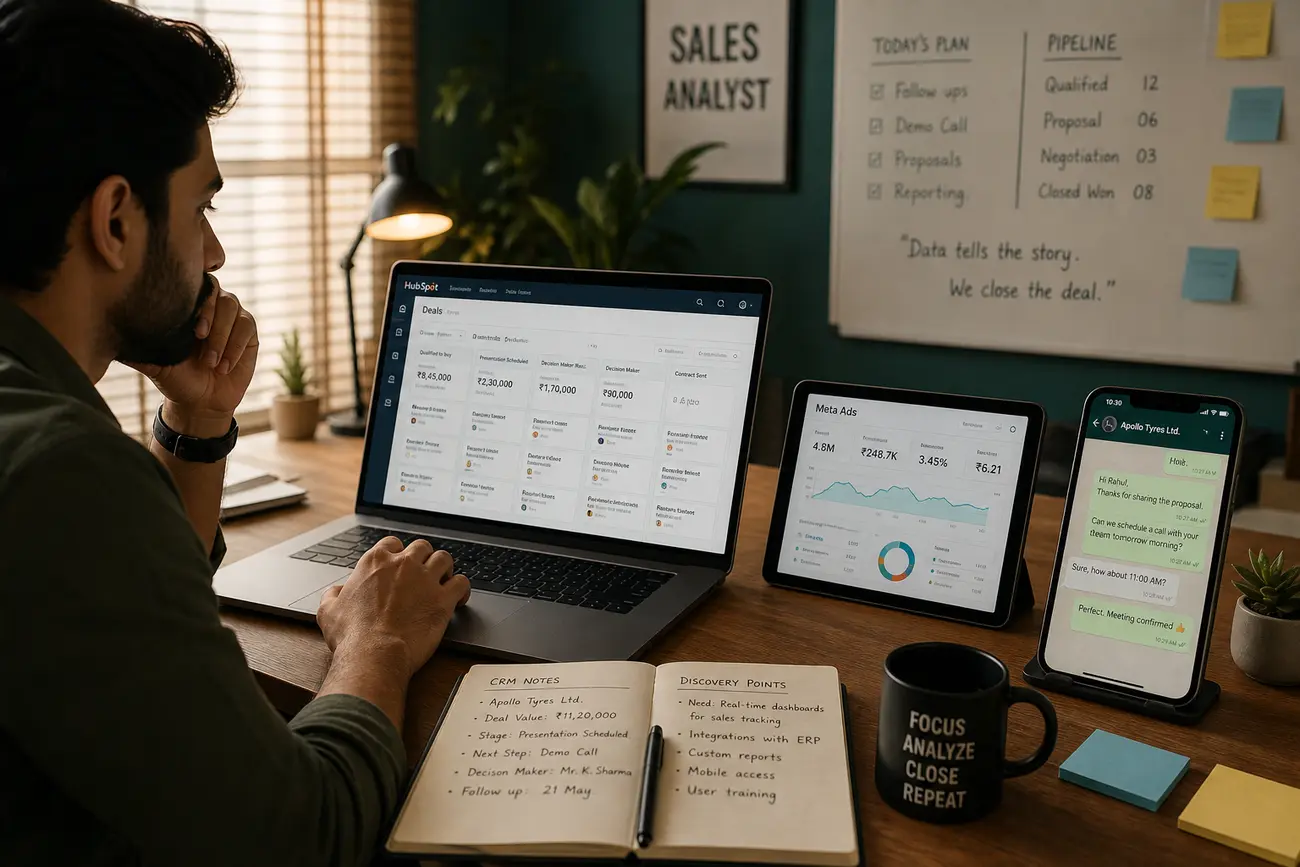
The costliest mistake in online media buying is paying for clicks without knowing which ads actually create paid orders in your online store. This guide shows how to connect ad spend, ecommerce tracking, purchase data, and automation so you can scale campaigns based on revenue instead of guesswork.
What Online Media Buying Should Measure for Ecommerce Sales
Online media buying means paying for traffic across channels such as Google, Meta, TikTok, marketplaces, affiliates, and display networks with a commercial goal: measurable revenue. Impressions, clicks, and sessions matter, but they are only early signals. For ecommerce, the real question is whether paid traffic becomes profitable orders.
At minimum, connect spend, sessions, product views, add-to-cart events, checkouts, purchases, revenue, ROAS, customer acquisition cost, and repeat purchases. Online store traffic is valuable only when you can tie it to product-level sales, margin, and customer value.
Tracking and automation bridge the gap between marketing online shopping behavior and business outcomes. They show which ads create buyers, then trigger follow-up that increases lifetime value.
Set Up the Tracking Foundation Before You Spend More
Before increasing spend, install GA4, Google Ads conversion tracking, Meta Pixel, and, where possible, Meta Conversions API. Browser restrictions, cookie limits, and consent settings can reduce tracking quality, so server-side signals help recover more reliable purchase data.
Create a clean UTM system for every campaign, ad set, creative, influencer link, and email follow-up. Use consistent fields for source, medium, campaign, content, and term. Track core ecommerce events such as view_item, add_to_cart, begin_checkout, purchase, refund, and lead for high-consideration products.
Every purchase event should include order value, currency, transaction ID, product SKU, and customer source. Use native integrations for Shopify, WooCommerce, BigCommerce, Wix, or Squarespace when available, then test with real or test transactions before trusting reports.
Connect Google and Meta Campaigns to Real Online Store Purchases
For Google Ads, import GA4 ecommerce purchases or use native Google Ads purchase conversions, then mark the revenue event as the primary optimization goal. In online media buying, optimizing for purchases usually beats optimizing for landing page views once the store has enough conversion volume.
For Meta campaigns, configure Pixel and Conversions API, prioritize purchase events, and confirm deduplication between browser and server events. Without deduplication, the same order may be counted twice, inflating ROAS and encouraging overspending.
Match campaign names, UTMs, and platform data so Google, Meta, email, organic, and referral sales can be compared consistently. Platform-reported sales, GA4 sales, and store revenue may differ because of attribution windows and modeling. Focus on directional truth: which campaigns repeatedly produce profitable orders.
Turn Ecommerce Data Into Smarter Budget Decisions
Once tracking is reliable, segment performance by product category, margin, average order value, new versus returning customer, device, and geography. A campaign with lower revenue can be more profitable if it sells high-margin products or attracts repeat buyers.
Shift budget toward campaigns with profitable ROAS after product costs, shipping, returns, payment fees, platform fees, and ad spend. Do not pause a campaign only because it has a low click-through rate if downstream purchases are strong.
Use remarketing audiences for product viewers, cart abandoners, checkout abandoners, and previous buyers. Build lookalike or similar audiences from purchasers, high-value customers, and repeat buyers instead of generic website visitors.
Automate Follow-Up After Each Sale and Abandoned Cart
Good online media buying does not end at the first order. Trigger post-purchase email or SMS flows immediately after purchase confirmation, including receipts, shipping updates, product care instructions, cross-sells, replenishment reminders, and review requests.
Build abandoned cart and abandoned checkout automations that reference the exact product viewed or left behind. Use customer tags and order data to personalize follow-up by product type, order value, first purchase, repeat purchase, or VIP status.
Send purchase data to your CRM so sales, support, and marketing teams can see the path from ad click to order. For more on operational automation, see How to Manage an Online Store with AI Automation. Strong automation improves profitability by increasing repeat purchases instead of relying only on new online store traffic.
Choose the Right Online Storefront and Retail Service Stack
The best online storefront is the one that fits your business and reliably passes purchase data to analytics, ad platforms, email tools, and your CRM. Shopify is often strong for ease of setup and integrations. WooCommerce offers flexibility for WordPress stores. BigCommerce, Wix, and Squarespace can also work well depending on catalog complexity, checkout needs, and technical resources.
Online retailing includes a DTC product store, a local shop selling online, a subscription box, a marketplace seller, an online grocery business, and a digital goods storefront. The platform matters, but tracking quality, checkout speed, catalog structure, and automation support often matter more for media-driven growth.
Online retail service companies can help with merchandising, marketplace management, analytics, paid media, or store operations. Before hiring one, confirm that you keep reporting access, ad account ownership, analytics visibility, and customer data ownership. If you also manage lead journeys, How to Measure Lead Performance with AI and CRM Data is a useful companion.
Common Tracking Mistakes That Waste Ad Spend
Avoid optimizing for traffic, landing page views, or add-to-cart events when the store already has enough purchase data to optimize for revenue. These softer events can help early learning, but they should not remain the main goal of mature online media buying.
Do not run campaigns without UTM parameters, conversion testing, and order-value tracking. Watch for duplicate purchase events that inflate ROAS. Separate brand search, remarketing, prospecting, shopping, and influencer campaigns so performance is not blended together.
Audit tracking after website updates, checkout changes, new apps, consent banner changes, payment changes, or migration to a new storefront. Many ecommerce tracking problems appear after a “small” technical update.
FAQ
What is the best online storefront for tracking ad sales?
The best online storefront is the one that supports reliable ecommerce events, purchase values, GA4, Google Ads, Meta Pixel, Conversions API where possible, and automation integrations. Shopify, WooCommerce, and BigCommerce are common choices, but the right answer depends on your catalog, checkout, and reporting needs.
Do I need an LLC for ecommerce?
You do not always need an LLC to start selling online, but many store owners form one for liability separation, banking, taxes, and credibility. Requirements vary by location and business model, so consult a qualified legal or tax professional.
What are examples of online retailing?
Examples include a Shopify DTC brand, a WooCommerce store for a local retailer, an Amazon seller, an online grocery store, a subscription box, a digital product storefront, and a marketplace shop selling handmade or private-label products.
What are 5 advantages of e-commerce?
Five major advantages are wider reach, 24/7 sales, measurable marketing, lower overhead than many physical retail models, and easier personalization through email, SMS, ads, and onsite recommendations.
What are the advantages and disadvantages of online shopping?
Advantages include convenience, larger selection, easy price comparison, home delivery, and personalized offers. Disadvantages include shipping delays, return friction, fraud risk, damaged packages, and the inability to inspect some products physically before purchase.
What are the top online retailers or top 10 online stores?
Rankings change by country and revenue, but common global examples include Amazon, Walmart, Alibaba, eBay, Target, Etsy, Shein, Temu, Best Buy, and Costco. SMBs should study their checkout, tracking, and retention systems, not copy them blindly.
What are popular online retailing companies?
Popular online retailing companies include marketplaces such as Amazon, eBay, Etsy, and Alibaba, plus direct retailers such as Walmart, Target, Apple, Nike, and Best Buy. Their strength usually comes from fast checkout, strong logistics, clear merchandising, and repeat-customer systems.
What are 10 advantages and disadvantages of the internet for ecommerce?
Five useful advantages are reach, speed, automation, data visibility, and lower barriers to entry. Five disadvantages are intense competition, privacy concerns, fraud, platform dependency, and the need for constant technical maintenance.
Share Article
Your Digital Edge, Fully Automated
Spin up a cutting-edge website in minutes and preview it free - no signup, no credit card. Then keep growing it with MR.ROBOT's AI pipeline that writes, optimizes, and publishes SEO articles straight from your phone.
No signup. No credit card. You only pay when you love the result.