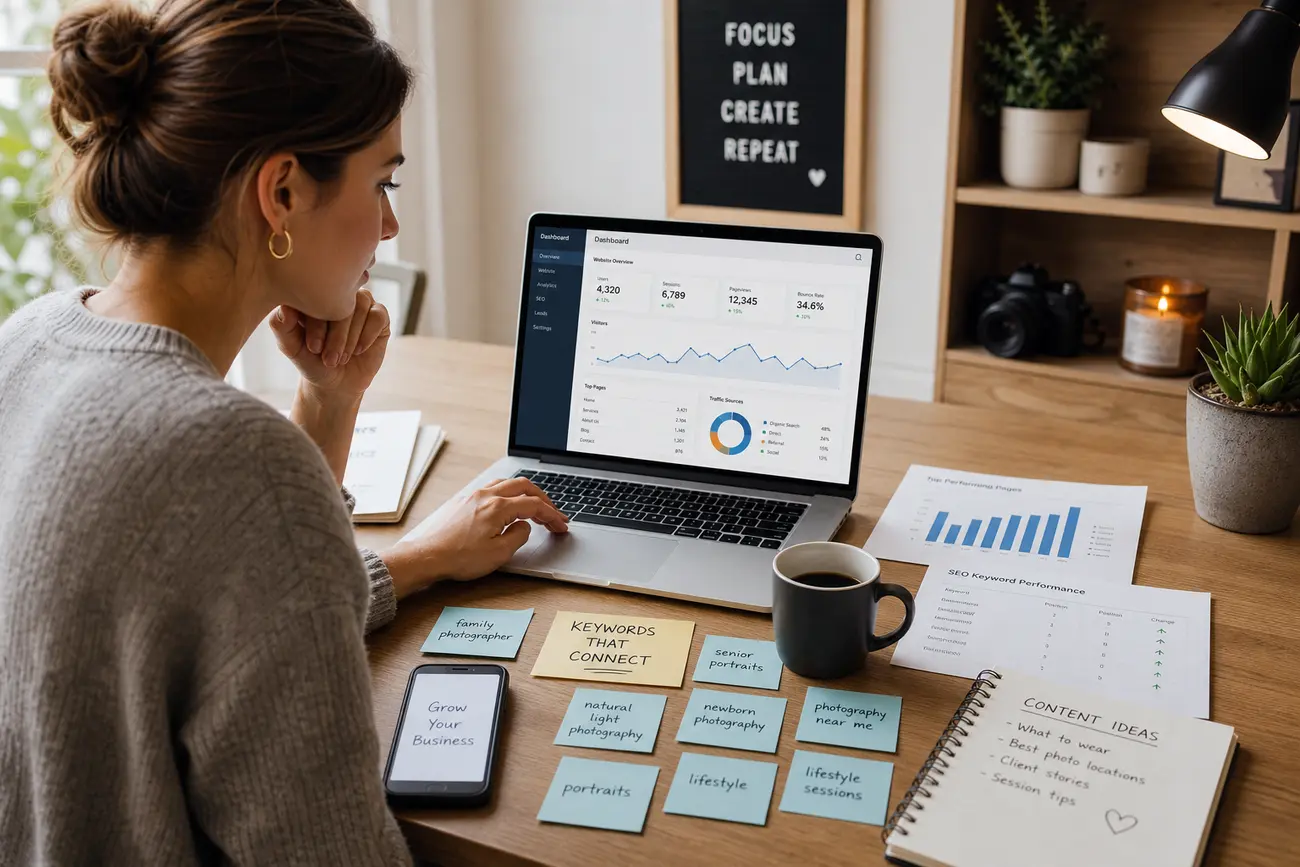
DIY SEO for small business is absolutely possible when you focus on the few actions that move revenue, not every tactic on the internet. With a practical process and AI as a helper for research, structure, and speed, you can improve search visibility, attract better leads, and know when it is time to bring in expert support.
DIY SEO for Small Business: What You Can Realistically Do Yourself
DIY SEO means improving how your business appears in search through keyword research, useful content, website updates, local optimization, basic technical fixes, and performance tracking. For many owners, diy seo for small business starts with clearer service pages, better answers to customer questions, and a stronger Google Business Profile.
You can usually handle page updates, blog planning, internal links, review requests, local page improvements, and simple technical checks without an agency. Outside help may be worth it for complex site migrations, advanced ecommerce SEO, serious indexing problems, or competitive link-building campaigns.
Set the right expectation: SEO compounds over months. Google Ads can create traffic faster, but it stops when the budget stops. SEO takes longer, yet strong pages can keep generating leads after the initial work is done.
Start With the 80/20 Rule for SEO: Focus on the Pages That Can Drive Revenue
The 80/20 rule for SEO means a small number of pages, keywords, and improvements often create most of your traffic, leads, and sales. Instead of rewriting your whole website, start with the pages closest to money: homepage, main service pages, location pages, product category pages, and high-intent comparison or problem-solving articles.
Choose priorities using real inputs: sales calls, customer emails, Google Search Console queries, competitor pages, and the questions prospects ask before buying. One of the most useful small business seo tips is to optimize pages that already have demand before creating brand-new content.
Use a simple spreadsheet with columns for target keyword, page URL, search intent, current ranking, update needed, and next action. This keeps diy seo for small business focused on decisions instead of busywork.
Use AI to Find Keywords and Build a Content Plan Without Guesswork
AI is excellent for brainstorming keyword ideas, grouping similar topics, turning customer questions into article outlines, and identifying gaps in your existing pages. Ask it for service-specific, location-specific, comparison, and “near me” keyword variations, then refine the list based on what your buyers actually ask.
Do not trust AI suggestions blindly. Verify them with Google Search Console, Google Keyword Planner, Google Trends, or affordable SEO platforms. Useful intent categories include informational keywords such as “how to maintain hardwood floors,” commercial keywords such as “best accountant for contractors,” local keywords such as “emergency plumber in Austin,” and transactional keywords such as “book roof inspection.”
Avoid publishing generic AI content. Add original experience, photos, examples, pricing context, case studies, service limitations, and expert review. AI can speed up diy seo for small business, but your expertise is what makes the content worth ranking.
Optimize Your Core Website Pages Before Publishing More Blog Posts
For most small businesses, service and product pages matter more than blog volume because they match buyer intent. Each important page should have one clear primary topic, a useful title tag, a compelling meta description, a descriptive H1, scannable H2 sections, and natural internal links to related pages.
Make each page genuinely helpful. Add testimonials, before-and-after examples, certifications, guarantees, service areas, pricing ranges, FAQs, original images, and a clear call to action. Answer objections before the visitor asks: what is included, how long it takes, who it is for, what it costs, and what happens next.
Local SEO is also essential. Keep your Google Business Profile complete, maintain consistent name, address, and phone information, request reviews, build location pages where appropriate, and make it easy for Google and customers to understand where you operate.
Run Simple Technical SEO Checks With the Best SEO Tools for Small Businesses
The best SEO tools for small businesses are not the most complicated tools; they are the ones that help you make better decisions. Start with Google Search Console for indexing and search queries, Google Analytics for conversions, PageSpeed Insights for speed, and a crawler such as Screaming Frog when you need to find broken links, missing titles, duplicate pages, or redirect problems.
Check monthly whether key pages are indexed, mobile-friendly, fast enough, internally linked, included in your sitemap, and not accidentally blocked from Google. Use AI to summarize crawl issues, draft meta description options, cluster keyword lists, and create content briefs, but always review recommendations before publishing.
Avoid tool overload. Begin with free Google tools, then add one paid platform only when there is a clear need. If you are comparing systems, this guide on how to choose the right SEO system for your business can help you avoid paying for features you will not use.
Measure Results: Know When SEO Is Working and When Google Ads Makes Sense
SEO results usually show up in stages: first more impressions, then better rankings, then more clicks, leads, and conversions. Track impressions, clicks, rankings, organic leads, assisted revenue, and engagement on your most important pages. A page that moves from position 18 to position 9 may not explode with traffic yet, but it is becoming an opportunity.
Google Ads can be useful while SEO is building. Is $10 a day enough for Google Ads? Sometimes, in a low-cost local market, it is enough to test. Is $20 a day good for Google Ads? It may produce better learning, but competitive industries often need more. The cost to do a Google ad depends on daily budget, keyword competition, targeting, landing page quality, and cost per click.
Review results monthly: improve pages ranking on page two, refresh outdated posts, expand pages that already convert, and pause work that is not tied to leads. If you want a separate paid-search process, read this practical guide to running Google Ads yourself.
When to Keep SEO In-House and When to Hire an SEO Agency
SEO services typically include audits, keyword research, technical SEO, content strategy, content production, on-page optimization, local SEO, link building, reporting, and conversion recommendations. An SEO agency brings process, tools, specialist expertise, and faster execution, but it costs more than a DIY approach.
Costs vary widely by market, competition, and scope. Freelancers may cost less, while full-service monthly retainers are usually higher because they include strategy, specialists, reporting, and execution. Be careful with very cheap packages; they often rely on shallow content, automated reports, or low-quality links.
Hire help when rankings stall, technical issues are blocking growth, competitors are investing heavily, content needs exceed your team’s capacity, or SEO is already producing enough revenue to justify reinvestment. AI does not make SEO dead; it raises the standard for expert-led, useful, well-structured pages.
FAQ
Is SEO dead now with AI?
No. AI changes how content is created and how people search, but SEO still depends on helpful pages, authority, technical quality, and matching user intent. Businesses that add real expertise to AI-assisted workflows can still win visibility.
What is the 80/20 rule for SEO?
It means focusing on the small set of pages, keywords, and improvements most likely to generate the majority of traffic and revenue. For diy seo for small business, this usually means optimizing core service, product, and location pages first.
What are the SEO services?
SEO services typically include audits, keyword research, technical fixes, on-page optimization, content strategy, content writing, local SEO, link building, conversion recommendations, and reporting. The exact mix depends on your website, goals, and competition.
What does an SEO agency do?
An SEO agency plans and executes work across technical SEO, content, authority building, local search, and measurement. The goal is to improve organic visibility and turn that visibility into qualified traffic, leads, sales, or bookings.
How much do SEO services typically cost?
SEO costs vary by country, niche, competition, and scope. One-time audits, freelance help, and full-service retainers can differ significantly. The more strategy, technical work, content production, and reporting included, the higher the cost usually becomes.
How much does it cost to hire an SEO agency?
Hiring an SEO agency usually costs more than doing SEO yourself or hiring a freelancer because you are paying for strategy, tools, specialists, execution, and accountability. The right budget depends on how competitive your market is and how fast you need progress.
Is $10 a day enough for Google Ads?
It can be enough for a small test in a low-cost local market, especially with narrow targeting. In competitive industries, $10 a day may not generate enough clicks or conversions to make reliable decisions.
Is $20 a day good for Google Ads?
$20 a day can provide more useful testing data than $10 a day, but it is still modest. Whether it works depends on your cost per click, conversion rate, offer, landing page, and local competition.
How much does it cost to do a Google ad?
Google Ads cost depends on your daily budget, bidding strategy, keyword competition, targeting, quality score, and cost per click. You control the budget, but the market determines how much traffic and lead volume that budget can realistically buy.
How do I stop Google Ads on my phone?
If you run ads, open the Google Ads app and pause the campaign, ad group, or ad. If you mean ads you personally see on your phone, adjust ad personalization in your Google account or change app notification settings.
Share Article
Your Digital Edge, Fully Automated
Spin up a cutting-edge website in minutes and preview it free - no signup, no credit card. Then keep growing it with MR.ROBOT's AI pipeline that writes, optimizes, and publishes SEO articles straight from your phone.
No signup. No credit card. You only pay when you love the result.