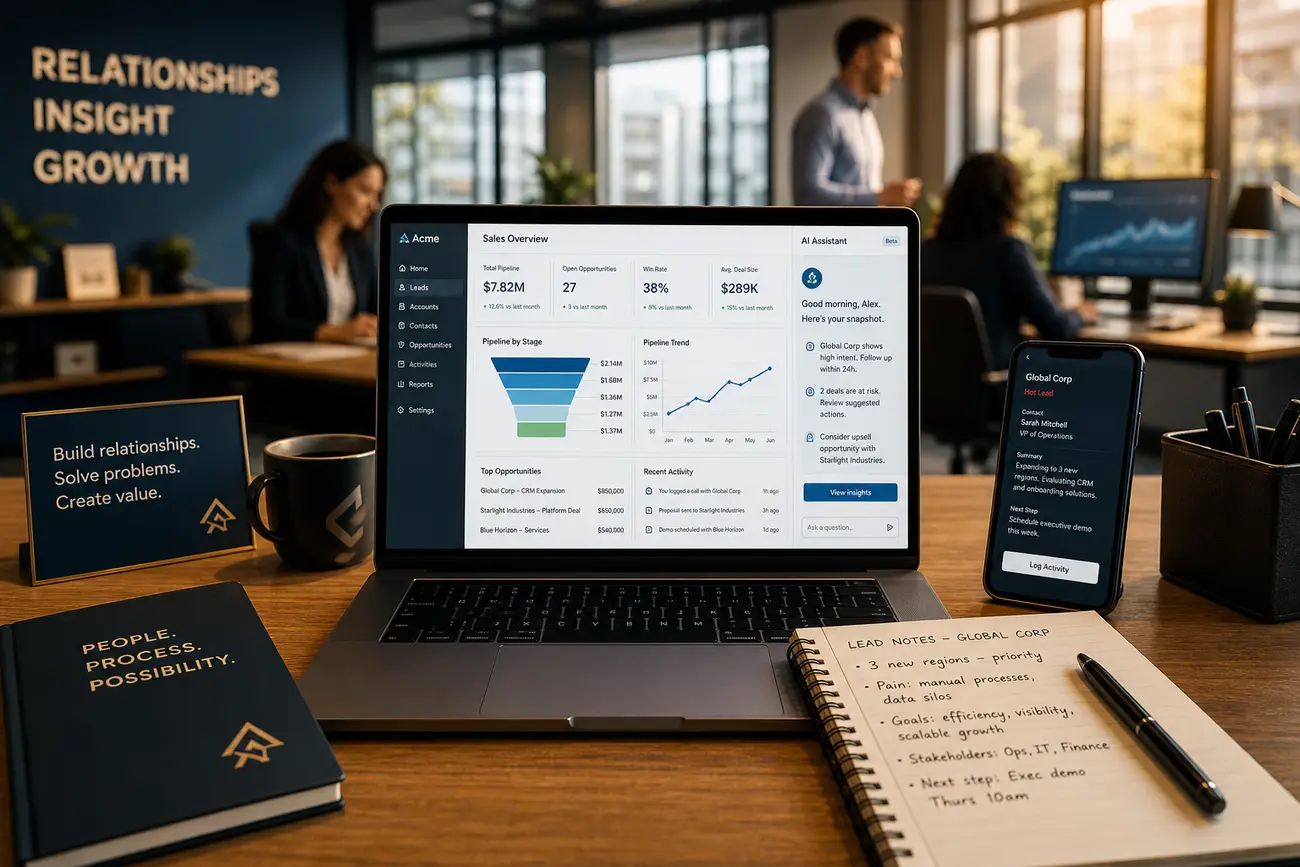
Lead qualification tools can make the difference between a buyer who books a meeting and a buyer who disappears overnight. Imagine a high-intent prospect submitting a pricing form at 10:47 p.m.; before a salesperson is back online, an AI agent responds, asks the right questions, qualifies the opportunity, updates the CRM, and routes it to the right owner for morning follow-up.
Why Speed and Consistency Matter in Lead Qualification
Many businesses do not lose leads because their product is wrong; they lose them because response times are slow, follow-up is inconsistent, or the qualification process depends too heavily on manual effort. A prospect who is ready to talk today may contact three vendors, and the first useful response often wins the conversation.
AI agents work as practical lead qualification tools that support sales and marketing teams rather than replacing them. They help every inquiry receive a timely response, ask consistent questions, and make sure promising prospects do not sit unnoticed in an inbox, spreadsheet, or unassigned CRM queue.
What an AI Agent Can Do as a Lead Qualification Tool
In this context, an AI agent is a system that can interact with prospects, collect structured data, interpret intent, update records, and trigger the next step. The best lead qualification tools combine conversation with workflow, so the output is not just a chat transcript but a usable sales action.
- Identify fit: industry, company size, location, use case, and target customer profile.
- Assess intent: urgency, buying stage, requested product, and current pain point.
- Check buying readiness: budget range, decision-maker status, timeline, and required approvals.
- Standardize data: apply the same criteria across website chat, forms, email replies, SMS, and inbound inquiries.
Instant Lead Response: Capturing Intent While It Is Still Fresh
An AI agent can respond immediately after a demo request, contact form, pricing inquiry, or content download. Instead of forcing a prospect through a long form, it can ask two or three high-value questions such as “What problem are you trying to solve?”, “When do you need a solution?”, and “Who should be involved in the evaluation?”
This is especially valuable after hours, on weekends, or for lean teams that cannot monitor every channel in real time. The goal is not to rush the buyer; it is to shorten the time between interest and meaningful sales engagement while the prospect still remembers why they reached out.
Routing, Scoring, and CRM Updates Without Manual Bottlenecks
Modern lead qualification tools can score leads using fit, engagement, urgency, company data, and stated needs. A high-fit enterprise inquiry may be routed to an account executive, while a smaller request may go to an inside sales rep, partner channel, or nurture sequence.
The AI agent can create or update CRM records, add conversation notes, tag the lead source, log consent details, and trigger tasks for human follow-up. Human teams should still define the qualification model, lead stages, and routing rules. For a deeper measurement framework, see How to Measure Lead Quality From Marketing Campaigns.
Using AI With Pipedrive Lead Qualification and Dynamics 365 Workflows
AI can improve Pipedrive lead qualification by creating deals, enriching contact records, assigning owners, and moving leads through pipeline stages based on clear criteria. Practical use cases include identifying hot leads, triggering follow-up tasks, summarizing conversations, and flagging missing qualification data before a salesperson makes contact.
Teams using Microsoft Dynamics can also benefit when they design workflows carefully. Searches such as “dynamics 365 customize lead qualification process” usually point to the same business need: making sure AI-collected data supports existing governance. Customization may include required fields, lead-to-opportunity conversion rules, automated routing, approval steps, and territory assignment.
The principle is simple: the AI agent should fit the CRM process instead of forcing the sales team to change how it works. When the CRM remains the source of truth, automation becomes easier to trust.
Follow-Up Sequences That Feel Timely, Not Robotic
Useful AI follow-up is based on what the lead actually said. If a prospect asks about pricing, the agent can send relevant guidance or a booking link. If they mention a specific pain point, it can share a case study, checklist, or product page that addresses that issue.
The difference between helpful automation and spammy outreach is relevance, timing, and control. Prospects should receive clear value, simple opt-out options, and a path to a human when the conversation becomes complex. AI can also revive stalled leads by checking in at the right moment and updating the CRM when someone re-engages.
Where AI Agents Need Human Oversight
AI agents are not a replacement for marketing strategy, brand positioning, relationship building, or complex negotiation. Humans should own messaging strategy, enterprise sales calls, pricing exceptions, qualification criteria, and the final judgment on high-value opportunities.
Strong safeguards matter. Use approved scripts, escalation rules, data privacy controls, CRM permission limits, and regular performance reviews. Sales and marketing leaders should review AI conversations over time to improve questions, scoring logic, routing accuracy, and conversion rates.
How to Choose the Right Lead Qualification Tools for Your Business
Choose lead qualification tools by looking at CRM compatibility, supported response channels, customization options, reporting, security, and ease of handoff to sales. Small teams may prioritize speed-to-lead and basic CRM updates, while larger teams may need advanced scoring, routing, permissions, and governance.
Measure success with practical metrics: average response time, qualified lead rate, meeting booking rate, sales acceptance rate, pipeline generated, and conversion from qualified lead to customer. If your leads come from multiple ad platforms and forms, it also helps to connect acquisition sources with CRM outcomes; this guide on connecting Google Ads, Meta Ads, and your CRM for better leads explains that foundation.
The best lead qualification tools help teams act faster, stay consistent, and focus human attention on the prospects most likely to convert.
FAQ
What are lead qualification tools?
Lead qualification tools are systems that help businesses identify, score, route, and follow up with prospects based on fit and buying intent. They organize lead data so sales teams can prioritize the opportunities most likely to become customers.
How does an AI agent qualify leads?
An AI agent qualifies leads by asking predefined questions, analyzing responses, scoring intent, updating the CRM, and triggering the next best action. That action may be booking a meeting, assigning a sales owner, sending a resource, or placing the lead into a nurture sequence.
Can AI replace a sales or marketing team?
No. AI supports repetitive response, qualification, and CRM update work, but humans still own strategy, positioning, relationships, complex discovery, negotiation, and final deal decisions.
How can AI improve Pipedrive lead qualification?
AI can improve pipedrive lead qualification by creating records automatically, scoring leads, updating pipeline stages, creating follow-up tasks, summarizing conversations, and highlighting missing information before a salesperson takes over.
Can Dynamics 365 customize lead qualification process rules for AI-assisted sales?
Yes. Dynamics 365 can be configured with required fields, routing logic, lead conversion criteria, approval workflows, and automation rules that use AI-collected data while keeping the sales process consistent and governed.
Share Article
Your Digital Edge, Fully Automated
Spin up a cutting-edge website in minutes and preview it free - no signup, no credit card. Then keep growing it with MR.ROBOT's AI pipeline that writes, optimizes, and publishes SEO articles straight from your phone.
No signup. No credit card. You only pay when you love the result.